Sunday Breakfast Club Philadelphia: Born in 1933, Meets on Wednesdays
I joined Philadelphia's Sunday Breakfast Club, founded in 1933. Here is its history, how membership works, and why it meets on Wednesdays.
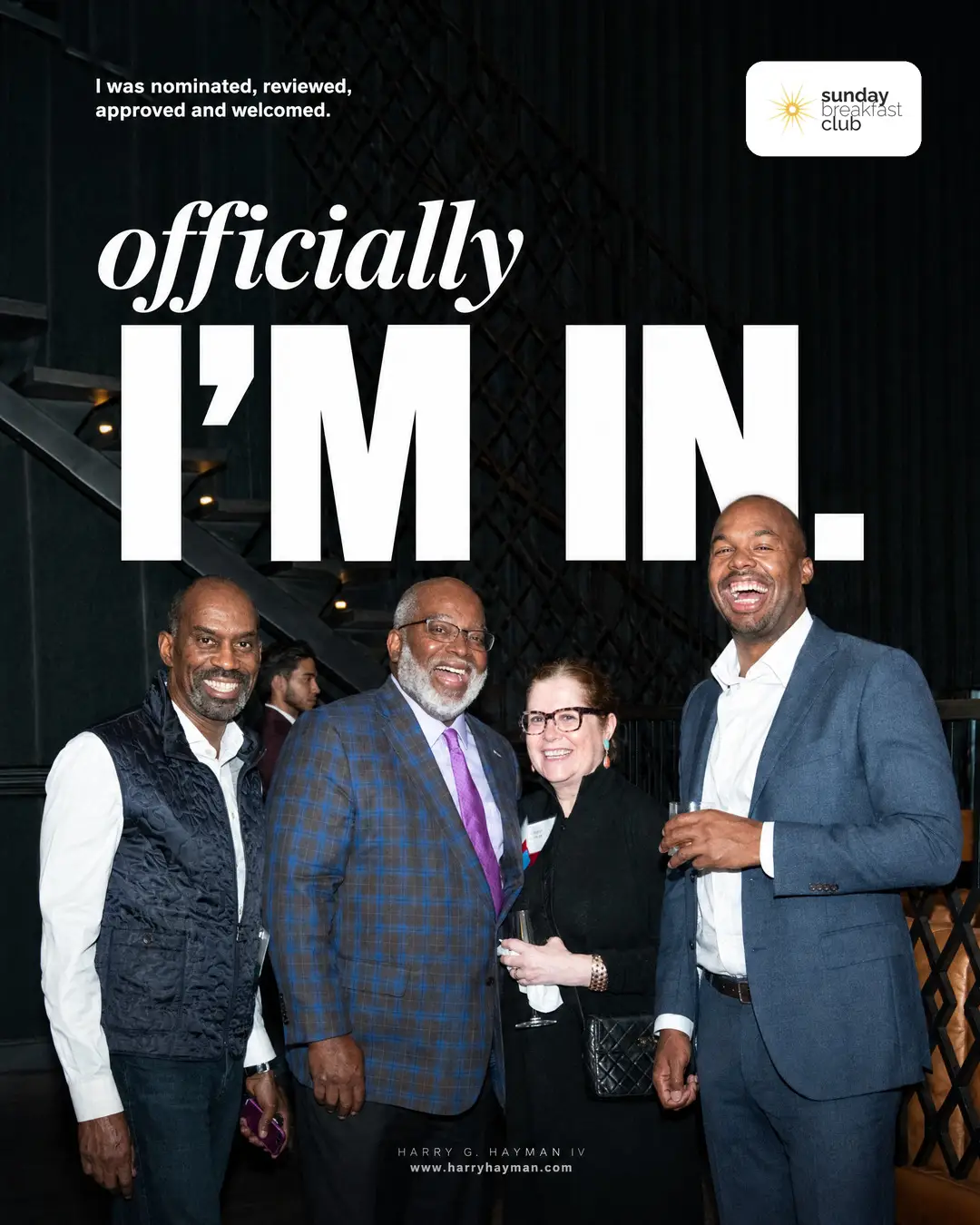
A club that began as a Sunday morning breakfast during the Great Depression just let me in, and today it meets on Wednesday evenings. I’m Harry Hayman, and this October I became a member of Philadelphia’s Sunday Breakfast Club. I was nominated, the Board reviewed it, and, as I put it in my post, nobody found a strong enough reason to keep me out. The club’s own homepage jokes about its name and its schedule, and I wanted to know how a breakfast club ended up at the dinner hour. So I read what the club publishes about itself and checked its history against other sources. This is the longer version of my post: where the club came from, how a person gets in, what Groucho Marx really wrote, who speaks in its rooms, and why I think a city like ours needs more rooms like it.
Born in the Depression, Named for a Breakfast
The Sunday Breakfast Club is a Philadelphia membership club that describes itself as bringing together the city’s rising and established leaders, and it has been doing that since 1933. Its About page tells the origin story, and the story starts with a crisis. During the Great Depression, the Permanent Committee on Unemployment of the Philadelphia Chamber of Commerce decided to invite other business and civic leaders to a series of meetings “to attempt an understanding of the economic happenings causing unemployment on such an enormous scale.”
The enlarged group organized itself as a club and held its first formal meeting on March 12, 1933. Dr. Virgil Jordan, head of the National Industrial Conference Board, spoke on “The Challenge to Leadership.” That board has been called The Conference Board since 1970, and Wikipedia says Jordan, its president since 1932, established a bureau offering independent studies on unemployment and related issues. For a club formed to understand unemployment, he was a sensible first speaker.
Look at the date. The Encyclopedia of Greater Philadelphia says that by March 1933 only 40 percent of the workforce was employed full time, and that more than half of the commercial banks and building and loan associations in Philadelphia failed between 1929 and 1933. The Miller Center lists President Franklin Roosevelt’s first fireside chat, “On the Banking Crisis,” as March 12, 1933, the same day, and says that by the time he took office nearly all of the nation’s banks had temporarily closed after mass withdrawals by a panicked public. I found nothing that ties the club’s first meeting to that broadcast. I still find it telling that this was the moment a group of Philadelphians chose to sit down and try to understand something.
That first series was seven private breakfast meetings held, in the club’s words, “every third Sunday morning (to permit thorough, unhurried discussion…) led by the best qualified speaker procurable.” I love that parenthesis. The club adds, “The emphasis was on understanding as the first step in a search for solutions,” and I like that order: understand first, then solve. Meeting on Sunday mornings for breakfast gave the club its name. In September 1935, the club says, it moved to dinner on the first Wednesday evening of the months of the program season. “The Club’s name has (proudly) remained the same ever since.”
Not on Sundays, and Definitely Not Breakfast
So the name is an heirloom, and a proud one. The About page says the club meets Wednesday evenings “for drinks and hors d’oeuvres (definitely not breakfast),” with speakers and panels taking on issues facing the city and region in a conversational atmosphere. It also says meetings rotate through a roster of venues and names three: Fitler Club, the Mann Center for the Performing Arts, now called Highmark Mann, and The Union League of Philadelphia, which says it was founded in 1862 as a patriotic society to support the Union and the policies of President Abraham Lincoln. The season page puts most 2026 and 2027 events on the first Wednesday of the month, from 5:30 to 7:30 PM, and adds ONE North Broad, Yards Brewing and a secret January location to the rotation.
That is the irony I closed my post with, a club called the Sunday Breakfast Club being very serious about membership, and the club got to the joke before I did. Its homepage says, “Not on Sundays for breakfast. On Wednesdays, for dinner. It’s a Philly thing.” The About page promises drinks and hors d’oeuvres, the homepage promises dinner, and both agree on one point: definitely not breakfast. It is a very Philly thing to keep a name for more than ninety years after the schedule changed, and then put the joke on the front page.
Nominated, Reviewed, Welcomed
Here is how a person gets in, as far as the club publishes it. The About page says membership “is offered upon a vote by the board, acting on nominations from members,” that the board is made up of club members appointed on a rotating basis, and that the club has approximately 210 members. The nominations page asks members to gauge a person’s interest before nominating them, and anyone who is not a member is pointed to a membership interest form.
Mine was the first route. I was nominated, the Board reviewed it, and the vote, evidently, went my way. I do not know who put my name forward, which is why my post thanked whoever thought enough of me to do it, and the Board for welcoming me. Being nominated is a strange kind of compliment, because the person who paid it can stay anonymous forever and the only way to repay it is to show up.
What Groucho Actually Wrote
My post leaned on the old Groucho Marx line about not wanting to belong to any club that would have someone like him as a member. I used it from memory, the way everybody does, so I went looking for the original.
Quote Investigator, a site that traces quotations to their earliest printed sources, has a long entry on the line, and its first finding surprised me: the sources agree that Groucho was resigning from a club, not refusing to join one. The earliest version it located is a Hollywood column by Erskine Johnson, dated October 20, 1949, which reported Groucho’s letter of resignation to the Friars Club: “I don’t want to belong to any club that would accept me as one of its members.”
Groucho told it himself in his 1959 memoir, Groucho and Me, in a fictionalized account where the club is called the Delaney Club. He writes that he sent the club a wire:
PLEASE ACCEPT MY RESIGNATION. I DON’T WANT TO BELONG TO ANY CLUB THAT WILL ACCEPT ME AS A MEMBER.
His son Arthur Marx told it again in 1988 with a different club, the Hillcrest Country Club, and a letter that opens “Dear Board.” Quote Investigator’s verdict is that nobody knows the exact wording, the club changes with the teller, and no one has produced the actual letter or telegram.
I find that comforting. The line is real, the details are slippery, and my version fits right in with all the others. One difference between Groucho and me: he used the line to leave. I get to use it to arrive.
Who Speaks in the Room
The club’s recaps show what the rooms are like. The most recent, from October 2026, covers a conversation with Dan Weiss, whom the club lists as Director and CEO of the Philadelphia Museum of Art. Maiken Scott of WHYY, the club’s host this season, wrote it up and pulled out two themes. One was serendipity, how a chance interaction or opportunity can alter the trajectory of our lives. The other was a rule I would happily hang over a lot of desks: when you see problems, double down and find solutions.
November 2025 brought Dr. Kerry Sautner, listed by the club as President and CEO of Eastern State Penitentiary, which describes itself as preserving America’s first penitentiary. Scott’s recap of that program ends with a line from Dr. Sautner worth repeating: “We have to come together in the civic square and recognize the humanity in one another and talk it out, talk it through, and don’t give up.”
The About page lists guests from recent years. One is Dr. Drew Weissman, the Penn Medicine researcher the club credits with a key role in developing the COVID vaccine, who shared the 2023 Nobel Prize in Physiology or Medicine with Katalin Karikó. Others include the restaurateurs Marc Vetri, Michael Schulson and Ellen Yin. The 2026 to 2027 season carries the theme Lightbulb Moments, and its page names Erika James, the dean of Wharton, and former Mayor Michael Nutter among the guests.
If the words breakfast club are starting to blur, I wrote earlier this month about a different group, the Saturday Morning Breakfast Club. What struck me there strikes me here. Somebody keeps getting people who should know each other into the same room, and I think a city is better for it.
A City of 1.6 Million Where Everybody Knows Somebody
In my post I said relationships matter, especially in a city where everybody seems to know everybody, or at least knows somebody who knows everybody. The 2020 census counted 1,603,797 people in Philadelphia, and Wikipedia lists it as the sixth most populous city in the country. The Sunday Breakfast Club has approximately 210 members. A room that size cannot hold a city that size. What it can do is put the right people at the same table on the same Wednesday and let word of mouth do the rest, and in Philadelphia word of mouth travels fast.
I have spent a good part of my life here trying to connect ideas, businesses, organizations and individuals who might otherwise never find themselves in the same room. The Feed Philly Coalition, the coalition I work with, is built on the same instinct. It describes itself as a coalition of nonprofits, businesses, government, healthcare, education, agriculture, philanthropy and community leaders working together, and it says it exists because collaboration, not competition, is how lasting, systemic change happens. The committee that started the Sunday Breakfast Club in 1933 seems to have been working from the same idea: something as big as mass unemployment has to be understood together.
I’m excited to listen, learn and contribute where I can, and hopefully help make a few connections along the way. You know me. I can’t seem to help myself when it comes to connecting the dots.
So here is where I stand. A club that began as a way to understand a crisis has made room for me at the table. It changed its day and proudly kept its name. I can respect a place that knows what to hold onto and what to move.
Sunday Breakfast Club, I’m in. Way in. Leaning in.
Onward.
Sources and references
- Sunday Breakfast Club
- Sunday Breakfast Club: About SBC
- Sunday Breakfast Club: Nominate a New Member
- Sunday Breakfast Club: Member Interest Form
- Sunday Breakfast Club: 2026 to 2027 Season Overview
- Sunday Breakfast Club: Dan Weiss program recap
- Sunday Breakfast Club: Kerry Sautner program recap
- The Conference Board (Wikipedia)
- Encyclopedia of Greater Philadelphia: Great Depression
- Miller Center: First fireside chat, March 12, 1933
- Fitler Club
- The Union League of Philadelphia
- Highmark Mann: About
- Quote Investigator: Groucho Marx and the club that would accept him
- Philadelphia Museum of Art
- WHYY
- Eastern State Penitentiary Historic Site
- Nobel Prize in Physiology or Medicine 2023
- Saturday Morning Breakfast Club and Avira at 3025 JFK
- Philadelphia (Wikipedia)
- Feed Philly Coalition