Philadelphia Introduces Bills for a Permanent Food Office
I sat on Philadelphia's Food and Nutrition Security Task Force. Here is what the new office bills say, what they leave open and what comes next.
On Thursday, October 8, five new file numbers appeared in the Philadelphia City Council record: 260829, 260833, 260839, 260841 and 260845. That is how an idea becomes real in City Hall. It gets a number. Together the three package files (260829, 260833 and 260845) propose a permanent Office of Food and Nutrition Security written into the Home Rule Charter, the city’s governing document, so that it outlives any one administration’s budget. In September I wrote that the report was finished and the office was not. This is the first answer to that sentence. I’m Harry Hayman, and I was on the Food and Nutrition Security Task Force for the seventeen months it took to write the recommendation behind those files. I could not be happier or prouder to have played even a small part. I also owe you precision, because the fastest way to lose a good idea is to announce it as won. Nothing about the office has passed. It sits in committee. Voters have not voted, and the earliest its Charter language could take effect is January 1, 2028.
What Council Received on October 8
Here is what the filed text says, because that is what Council will vote on. Resolution 260845 proposes the Charter amendment. It would create the Office of Food and Nutrition Security, headed by a Director of Food and Nutrition Security whom the Mayor appoints with the advice and consent of a majority of Council. The director would need at least five years of senior leadership experience in fields from food policy to public health, and the Charter text sets the salary at $175,000. The same resolution would create the Food and Nutrition Security Advisory Commission.
Bill 260829 is the companion ordinance that would put the question to voters on May 18, 2027, asking whether the Charter should be amended to create the office and the commission to promote citywide access to sufficient, healthy, affordable, nutritious, safe and culturally appropriate food. Bill 260833 carries the working details and takes effect only if voters say yes. It defines food and nutrition security as more than hunger: enough food, by quantity, nutritional quality, safety and cultural suitability, without persistent hunger. The Mayor would appoint the commission’s members in consultation with the Council President. The office would owe Council a Food and Nutrition Security Plan every year, starting no later than January 1, 2029. The office, or another agency the Mayor designates, would also run an online portal with data, maps, the plan and the city, state and federal programs that promote food and nutrition security.
Council also adopted two hearing resolutions at that Thursday meeting in Room 400 of City Hall. Resolution 260841 asks the Committee on Public Health and Human Services to examine the feasibility of city supported grocery stores. Resolution 260839 asks the Committee on Technology and Information Services to look at surveillance, algorithmic and dynamic pricing in the grocery industry. Metro Philadelphia reported that Council President Kenyatta Johnson described the package the afternoon before, at a news conference inside Philabundance’s warehouse off Pattison Avenue. His office calls it the Philly Food Affordability Act.
Why Somebody Has to Own Food
Strip the legislative language away and the bills answer one question: who is responsible? Philadelphia has government, healthcare systems, schools, farmers, growers, grocers, restaurants, nonprofits, universities, philanthropy and neighborhoods all doing real pieces of this work. What we have been missing is a place responsible for helping coordinate the pieces. Honestly, it is a logistics question. Food policy is trucks, refrigeration, phone numbers and one person with the authority to say yes.
The Task Force report had a blunter image. It called the permanent coordination office “the air traffic controller the system currently lacks,” a phrase Metro Philadelphia picked up in its coverage of the package. Look at what the Charter text does with that image. It would give the controller a job title, a salary and a confirmation vote in Council. It would hand over a list of duties: developing citywide food policy, collecting and publishing data and research, pursuing federal, state and philanthropic funding, and building ways for residents and food providers to be heard. The annual plan would have to set criteria for finding the places that carry the heaviest burden, list what the city already does about it, name the barriers that keep residents out of decisions and report what the office itself runs.
So when a pantry director or a school principal asks who is responsible for food in city government, there would be a name on the door. Somebody owns it. After seventeen months at that table, I wanted to be able to write that sentence.
How the Charter Route Works
Changing the Charter is deliberately harder than passing an ordinance. The resolution cites state law saying an amendment may be proposed by a resolution that Council adopts with the concurrence of two thirds of its elected members. Council has seventeen members, so that means twelve votes. Nine names appear as sponsors on Resolution 260845: Johnson, Majority Leader Katherine Gilmore Richardson, and Councilmembers Phillips, Landau, Lozada, Harrity, O’Rourke, Driscoll and Ahmad. The Inquirer reported that Gilmore Richardson introduced the proposal on Johnson’s behalf. Nine is a strong start. It is not twelve, and I will not pretend to know how the count ends.
What comes next is committee work. Legistar shows Resolution 260845 and Bill 260829 with the Committee on Law and Government, and Bill 260833 with the Committee on Finance. After Council comes the electorate, and a yes on May 18, 2027 would make the amendments effective on January 1, 2028.
Why take the hard road? The Task Force asked for it. The first recommendation in the report calls for a formal Charter change that survives political transitions and “cannot be reduced or eliminated at administrative discretion.” Philadelphia has just shown the road is passable. In May 2026 voters made the Office of the Youth Ombudsperson a permanent city agency by adding it to the Charter. That office began in 2022 through the budget process and an executive order, and advocates pushed for years to make it permanent and independent. An office in the Charter is harder to shrink on a whim, and that is the point.
What the Task Force Asked For, and What Arrived
Council created the Task Force by resolution in 2024, and its inaugural meeting release named two chairs, George Matysik of SHARE Food Program and Mark Edwards of The Food Trust. Around the table were Philabundance, MANNA, Sankofa Community Farm, The Community Grocer, the Pennsylvania Food Merchants Association and Children’s Hospital of Philadelphia. I write here for myself, not for the Task Force or the organizations around that table. We worked from public testimony, community listening sessions and stakeholder interviews, according to the Council’s June release of the recommendations. In that release Johnson said he would spend the summer working with the Parker Administration, Task Force members and community stakeholders, then introduce legislation this fall. On October 8 it went in, with his name first on the sponsor line.
Set the report beside the filed text and the matches are easy to find. Recommendation one was a permanent, city led coordination office, and that is Resolution 260845. Recommendation three called for public dashboards and a shared data platform, “one resource, not 326 search results,” and the online portal in Bill 260833 is the version of that I can point to today. Two asks have only partial matches, and they are the ones I will be watching. The report wanted a standing body that shares real power with residents, with stipends and “not advisory status.” Bill 260833 gives the Advisory Commission the job of advising the office and pays its members $125 a meeting, up to $1,500 a year. The report also wanted dedicated operating funds rather than one time or discretionary support. In the filed text, the mechanism to fund the work is the office’s duty to identify and pursue federal, state, philanthropic and other funding, and how much that brings in year to year is still to be settled. None of that is a complaint. Those are questions for the committee hearings, and I would rather hear them asked on the record than assumed away.
What the Grocery Store Hearing Is, and Is Not
The grocery store will draw the headlines, so a word about what Resolution 260841 does. It does not open a store. It authorizes hearings. Its own language says the aim is to examine partnerships that expand affordable food access “without requiring the City to directly operate grocery stores itself,” and it names models other cities have tried: New York City’s groceries initiative, Atlanta’s Azalea Fresh Market and Newark’s community partnered stores. It also notes that grocery prices in the Philadelphia region rose by about 35 percent between December 2019 and June 2026, citing the U.S. Bureau of Labor Statistics. The Inquirer noted that none of the proposals take immediate action. I think a hearing is the right size for the question. Grocers, food merchants and community grocers sat on our Task Force next to food banks and clinicians, and the best test of an idea like this is whether the people who run stores will come to the table and say what it would take.
Why I Keep Saying Beginning
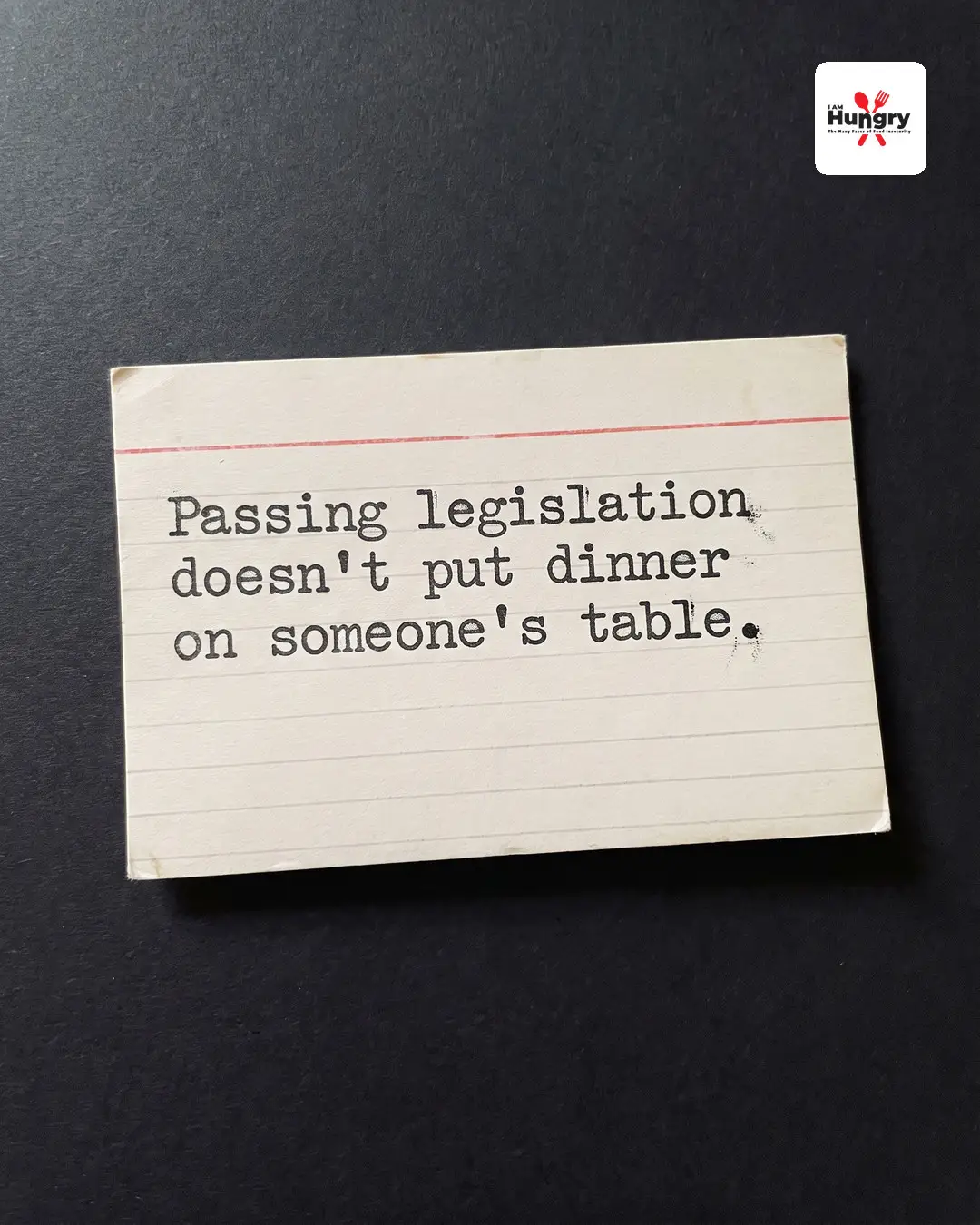
Creating an office doesn’t end food insecurity. Passing legislation doesn’t put dinner on someone’s table. I wrote those two sentences before the bills were filed, and the filed text has not changed my mind. Metro Philadelphia, citing Feeding America’s 2024 data, counts nearly 275,000 Philadelphians living with food insecurity, including 27 percent of the city’s children. Johnson told reporters on October 8 that thousands of families will be food insecure because they lose SNAP benefits starting October 1, according to KYW Newsradio. Even if every vote goes the right way, the office does not open until January 1, 2028, and its first annual plan arrives by January 1, 2029. That is a long time to stand at a food bank door. For those months the work belongs to the people already doing it, and to a city budget that decides what it will back.
So I keep saying beginning, not victory lap, and I say it with gratitude to Council President Kenyatta Johnson and his team, to Matysik and Edwards, to my fellow Task Force members and to the people across Philadelphia who never accepted the way things were. They deserve the credit. What they have handed the city is a chance to treat food as the infrastructure it is: not program by program, but as a system with an owner, a map, a plan and a public record of whether it is working. The test comes after the vote, on the first day someone calls that office and it answers. Onward and upward, as if someone’s life depends on it. Because hundreds of thousands of them do.
Sources and references
- Resolution 260845, Charter amendment (Legistar)
- Bill 260829, ballot question (Legistar)
- Bill 260833, commission, plan and portal (Legistar)
- Resolution 260841, grocery store hearings (Legistar)
- Resolution 260839, pricing technology hearings (Legistar)
- City Council meeting, October 8, 2026 (Legistar)
- Council release: Task Force recommendations, June 2026
- Task Force report and recommendations (PDF)
- Council release: Task Force inaugural meeting, February 2025
- Council release: voters make the Youth Ombudsperson office permanent
- About Philadelphia City Council, seventeen members
- Metro Philadelphia: Johnson calls for a food insecurity office and grocery store hearings
- The Philadelphia Inquirer: Should Philly open a city supported grocery store?
- KYW Newsradio: Council considers measures on food insecurity
- My September post on the report and the office
- SHARE Food Program
- The Food Trust
- Philabundance